
Quinn Nelson's Fundraiser
Join me in supporting NISGUA — 45 years of resistance ✊🏾 / Acompáñame a apoyar a NISGUA — 45 años de resistencia ✊🏾
Every donation is doubled through May 31! / ¡Cada donación se duplica hasta el 31 de mayo!
We are no longer accepting donations on this campaign, but there are other ways for you to support us today!

Britt Anderson
"Thanks, Quinn, for sharing about your work, your motivations for this work and your learnings. "
$100
A supporter of Quinn Nelson
I donated in support of this campaign.
$70
-
Jodi Short
I donated in support of this campaign.
$100
A supporter of Quinn Nelson
I donated in support of this campaign.
$50
-
Myles Nelson
I donated in support of this campaign.
$25
-
Mary Kathryn Wells
"Thanks for making the world a better place, Quinn!"
$50
-
Alton Nelson
I donated in support of this campaign.
$50
-
Margaret Roberts
"Quinn, we are glad you are out there making a difference in the world. Best wishes and hugs from Cleveland. "
$50
A supporter of Quinn Nelson
I donated in support of this campaign.
A supporter of Quinn Nelson
"Keep up the good work, so impressive."
$100
-
Kim Cole
I donated in support of this campaign.
$25
A supporter of Quinn Nelson
I donated in support of this campaign.
-
Kimi Kean
"Só proud of you Quinn! Keep up the great work"
$100
A supporter of Quinn Nelson
I donated in support of this campaign.
$50
A supporter of Quinn Nelson
I donated in support of this campaign.
$10
I started as an accompanier with NISGUA in April. It has been an honor to be trusted with this work, and to start building relationships with our contrapartes.
In my first week, our team traveled to Chimaltenango, where we accompanied two inhumaciones: remains of two men who had been dissapeared and killed during the internal armed conflict more than forty years ago were finally returned to their families to rest, after being exhumed from a mass grave a few years prior.
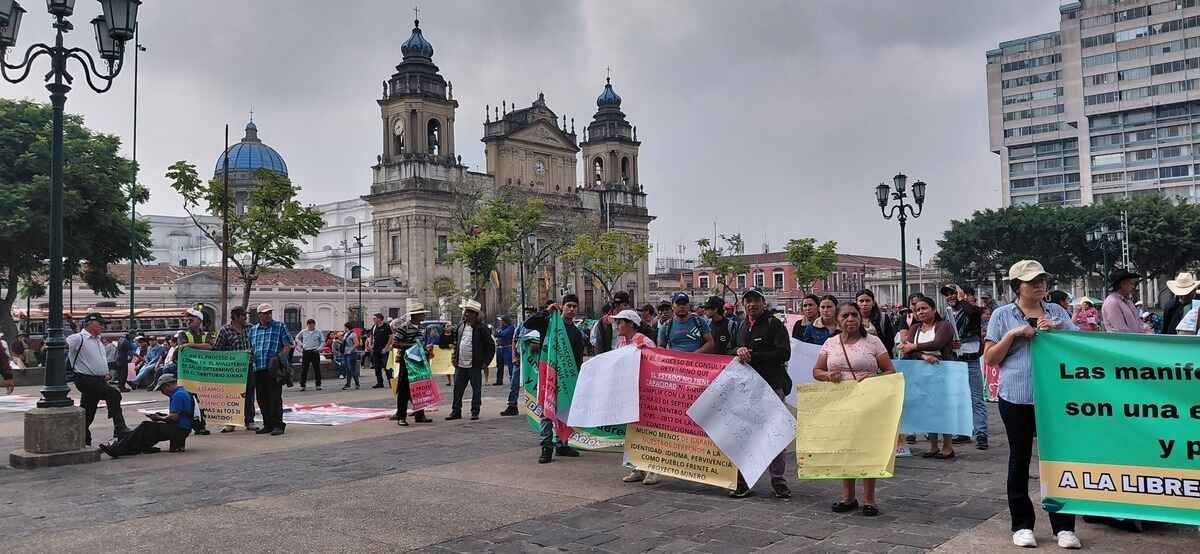
Two weeks later we traveled to the Xinca territory, in the southeast, where various organizations have been actively resisting the El Escobal silver mine for more than a decade. The mine, which is now owned by the Canadian company Pan American Silver, has severely contaminated the region's water supply, wrecking environmental, social, and economic havoc upon the people who live near it.
This week I've been in court, accompanying the case of Luz Leticia. Luz was a member of a militant student group in Guatemala City during one of the most violent periods of the war, in the early 80s. In 1982, she and her comrades kidnapped the nephew of the then-president, Efraín Ríos Montt, hoping to exchange him for a member of the student group that had recently been detained. Luz, along with other members of the group, were later captured, tortured, and eventually executed without due process by the Guatemalan state. Luz Leticia's family has been fighting for justice for more than forty years.
Despite all that's going on here, I've been thinking a lot about the US these past few weeks; checking daily for updates about our actions in Iran, worried each time that we've caused "a whole civilization to die [....] never to be brought back again." Hopes for a sea-change in the midterms have largely been dashed by the Supreme Court's decision in Louisiana V. Callais—effectively rendering the Voting Rights Act obsolete and disenfranchising hundreds of thousands of Black voters in the South.
When things seem grim, I am always reminded of my dad's mother and her twelve siblings, who grew up in the Jim Crow South in west Georgia. I had the privilege of interviewing many of them two years ago, and got to hear their stories about picking cotton on their father's sharecropped land, moving North during the Great Migration, serving in the army of a country who did not grant them equal rights, and courageously desegregating their town's schools in spite of the threats and insults lobbed at them by their white neighbors. Part of the reason why I was interested in taking up this work with NISGUA is to learn more about how Black liberation struggles in the US are connected to Indigenous liberation struggles here in Guatemala.
What I know from the history of the US is that the path of justice is winding. Hearing my family's stories about the terrorism campaigns of the Klan fifty years ago—dissapearing people, killing them extrajudicially, patrolling the boundaries of citizenship and whiteness—I cannot help but think of ICE, and the terror it has unleashed upon neighborhoods and families across the US. But things have changed, even if wins are slow and costly. Our present is shaped by the battles of the past; it is our responsibility to push things forward. If not by miles, then by inches. If not by inches, then by centimeters. The work I've done here in Guatemala thus far—accompanying the inhumaciones, and later the Luz Leticia case—give me faith that justice can, and will, prevail.
I believe strongly that sustained attention to, and solidarity with, international freedom struggles strengthens rather than dilutes our ability to fight for justice in the US. In my short time here in Guatemala, I have already learned so much about what the long haul truly means. Building networks of support across borders is one way to ensure that we can mutually sustain one another, nurturing the slow work of bringing forth justice.
Donating is one way to support us. Another way is through your time and attention. Staying informed about NISGUA's work, and spreading information to your own networks, is a great way to help if you don't have the financial means to donate. If you would like to learn more, please feel free to reach out to me at any time.
With love and gratitude,
Quinn